György Rágyanszki, Deputy State Secretary for Ethnic Minority Affairs, and Bence Püski-Liker, Chief of Staff, visited ELTE TÓK. They were welcomed by Dean Dr. Éva Márkus, who introduced them to our programs for national minorities, discussed the faculty’s funding challenges stemming from low state subsidies, and addressed the personnel and financial difficulties arising from teaching small-enrollment courses.
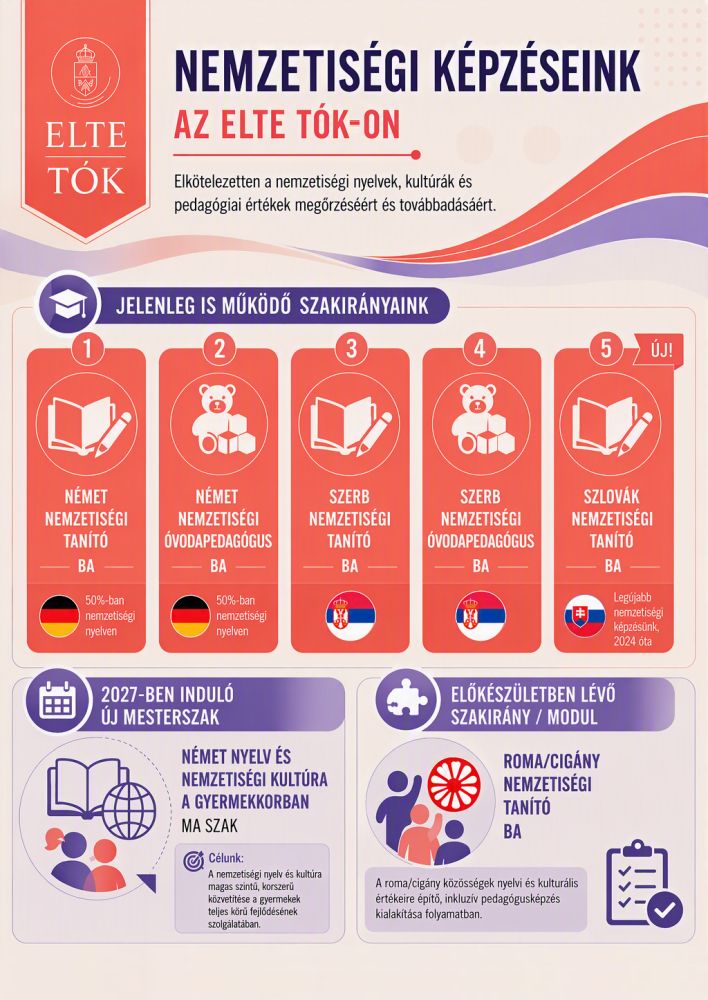
Our faculty plays a leading role nationwide in the training of teachers for ethnic minority communities. The faculty is committed to preserving the languages, cultures, and traditions of the ethnic minorities living in Hungary; therefore, ethnic minority specializations are given priority in teacher training. Currently, German and Serbian ethnic minority specializations are available as part of the primary school teacher and preschool teacher training programs, and the primary school teacher program now also includes a Slovak ethnic minority specialization in its curriculum.
The goal of ethnic minority language training programs is to prepare educators who, in addition to teaching and educating children in Hungarian, are capable of using the ethnic minority language, strengthening ethnic minority identity, and conveying the cultural heritage of the respective community. In addition to language training, students learn about the history, traditions, and literature of these ethnic groups, as well as modern methodologies for bilingual education.
A distinctive feature of the German ethnic minority teacher training program is that a significant portion of the professional courses and practical training takes place in the target language. Students not only acquire a high level of language proficiency but also become capable of teaching subjects in German and working in ethnic minority institutions.
ELTE TÓK’s strategic goal is to further strengthen its leading role in teacher training for ethnic minority communities, develop existing specializations, and open up new training opportunities in the future.